P-Card vs. corporate card: Choosing the right solution for your business


Key Takeaways: P-Card vs. Corporate Card
Purchase cards (P-cards) and corporate cards both simplify business spending, but they serve different purposes. P-cards streamline procurement with strict vendor restrictions and pre-approved spending categories, while corporate cards handle travel and entertainment expenses with broader flexibility. Choosing between them depends on a company's spending patterns, control needs, and operational priorities.
- P-cards reduce procurement costs by cutting administrative expenses from $50–$100 per transaction to under $20 through eliminated purchase orders and invoices.
- Corporate cards offer travel perks like rewards, insurance, and lounge access, making them better suited for companies with frequent business travelers.
- Both card types carry misuse risks requiring strong oversight - P-cards through unauthorized vendor purchases and corporate cards through overspending.
- Navan integrates P-cards and corporate cards into a single platform with real-time tracking, automated reconciliation, and single-use virtual cards for security.
- Navan's built-in policy controls automatically categorize and approve transactions, eliminating manual expense reports and reducing fraud risk.
Managing business expenses involves more than just tracking receipts: It requires having the right financial tools to keep spending sharp, strategic, and stress-free. Enter P-cards and corporate cards. These two financial heavyweights are designed to streamline transactions and give businesses the control they need — and each comes with its own unique edge.
Purchase cards (P-cards) make it easy to purchase supplies without the need for purchase orders, while corporate cards are the go-to for business travel. They enable employees to book flights and hotels and make purchases on the road without dipping into personal funds.
Right now, the corporate purchasing card market is booming, with billions flowing through these cards as companies shift to digital, automated expense management. But as demand for real-time tracking, security, and seamless integration grows, businesses must decide which type of card best fits their strategy.
Let’s break down the roles, benefits, and key differences between P-cards and corporate cards.
The Differences Between P-Cards and Corporate Cards
P-cards and corporate cards simplify business spending, but maximizing their benefits depends on how they’re used, controlled, and repaid, which can transform the flow of financial operations.
Here’s a quick comparison:
Category | P-Cards | Corporate Cards |
|---|---|---|
Usage Scenarios | Ideal for procurement and operational purchases | Best for travel and entertainment expenses |
Spending Controls | Strict; pre-approved vendors only | Flexible but requires post-purchase reporting |
Repayment Terms | Centralized, structured system simplifies repayments | Tied to company credit limits; requires diligent oversight |
Operational Effect | Lower procurement costs | Attractive perks such as rewards |
Usage Scenarios: Procurement vs. Travel
Spending Controls: Precision vs. Flexibility
Repayment Terms: Streamlined vs. Flexible
Operational Effect: Efficiency vs. Perks
Goodbye Expense Reports: Navan Has You Covered
Some corporate cards come with a catch: legacy expense management systems that require tedious, burdensome expense reports. Navan eliminates this hassle with automation, real-time tracking, and built-in policy controls. Transactions are automatically categorized, reconciled, and approved so employees can focus on work, not paperwork.
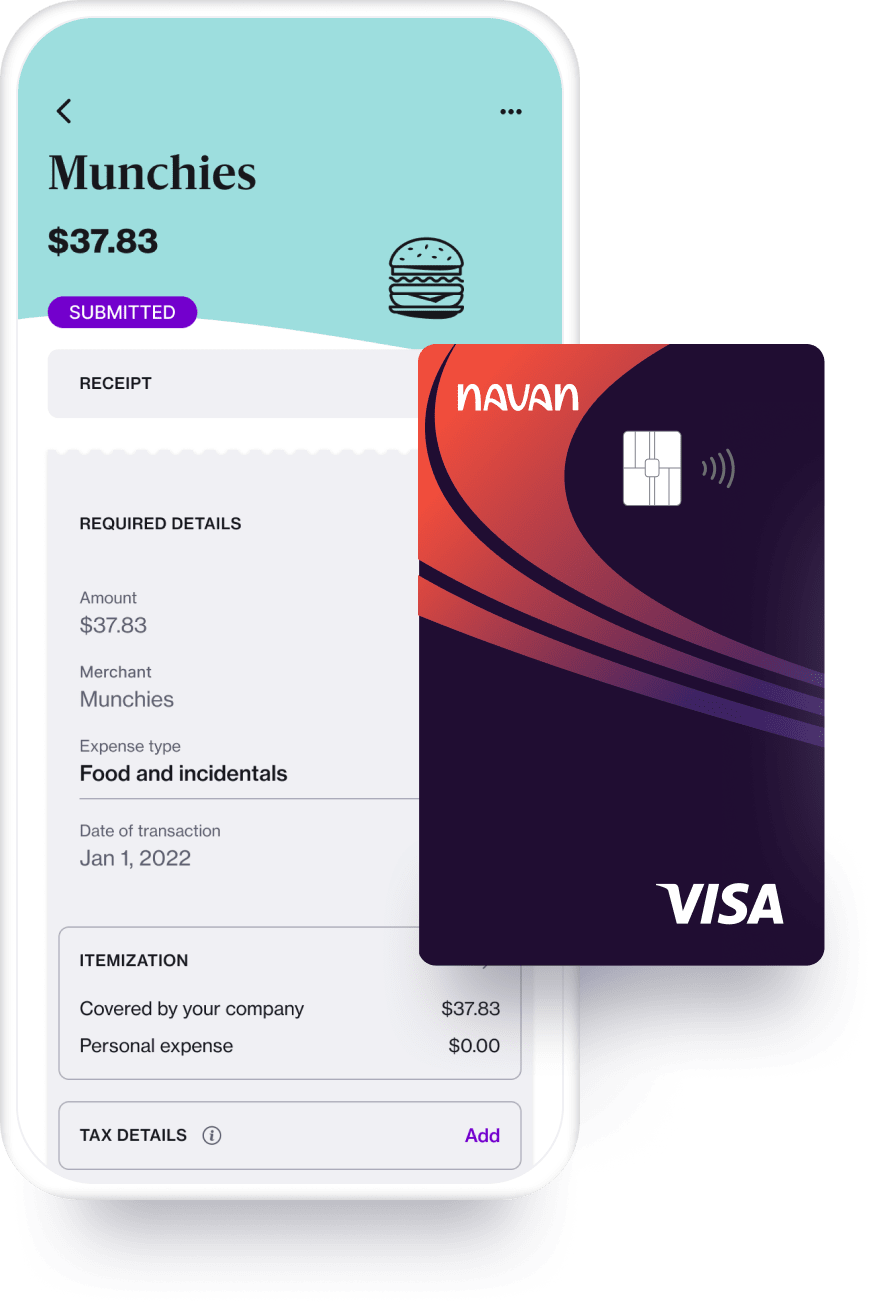
A collage of a submitted expense using the Navan mobile app and a Navan corporate card
Advantages and Disadvantages of P-Cards
P-cards streamline procurement, but they’re not a universal fix. While they cut costs and boost control, they require careful oversight.
Advantages: Faster, Cheaper, and More Controlled Spending
P-cards cut administrative costs by eliminating the need for purchase orders and invoices. They also enhance cash flow management by allowing businesses to extend payment timelines, while vendors receive immediate funds.
With built-in controls like transaction limits and spending categories, P-cards reduce the risk of unauthorized purchases and simplify expense tracking.
Disadvantages: Misuse Risks and Administrative Overhead
Without strict oversight, P-cards can be misused through fraudulent transactions or employees making unauthorized purchases. Also, they don’t integrate as seamlessly with enterprise resource planning (ERP) systems as traditional procurement methods, making company-wide spend analysis more complex.
Implementing a P-card program also often requires dedicated administrative efforts:
- Policy setup
- Employee training
- Transaction reconciliation monitoring
Pros and Cons of Corporate Cards
Corporate credit cards simplify expense management and can be a valuable tool with broader acceptance and attractive rewards.
Pros: Convenience, Cash Flow, and Rewards
Corporate cards are widely accepted, making them ideal for travel, online purchases, and vendor payments. They also enhance cash flow by allowing businesses to manage expenses without depleting cash reserves. Many cards offer perks like cash back or travel points, potentially saving companies a small percentage of their spend.
Cons: Overspending and Fraud Risks
Easy access to credit can lead to overpsending, as easy credit access may discourage strict budgeting, and tracking multiple accounts complicates expense management. These cards are also prime targets for fraud and unauthorized purchases, posing risks that require strong oversight and robust security measures.

Preventing Misuse: Policy Guardrails and Real-Time Oversight
Companies should implement clear spending policies, transaction limits, and real-time alerts to curb misuse. Expense management software can flag suspicious transactions to help keep everything transparent.
By combining strong controls with proactive oversight, businesses can maximize the benefits of corporate cards while minimizing financial risks.
Implementing the Right Card Solution in Your Organization
Choosing between purchase cards (P-cards) and corporate cards requires a strategic approach tailored to your organization’s financial and operational needs. Here’s how to implement the right card solution effectively:
1. Assess Business Needs
Start by analyzing your company’s spending habits. If dominated by frequent, low-value purchases (e.g., office supplies and vendor payments), a P-card program may be the best fit. Corporate cards offer better control and perks for travel, entertainment, and high-value transactions.
2. Define Clear Objectives
Determine your goal with a card program and pick a system that supports your broader financial and operational priorities, such as speeding up procurement, improving spending visibility, or simplifying payments.
3. Implement Strong Controls
To prevent misuse and overspending, set budgets and merchant restrictions. Corporate cards should integrate with expense tracking systems for real-time monitoring, while P-cards should have pre-approved spending categories. Seamless integration with accounting or ERP systems makes for efficient reconciliation.
4. Develop Comprehensive Policies
Clearly define how employees can use company-issued cards. Establish policies on spending limits, reporting procedures, and compliance requirements. Specify who is eligible for a card based on job function and spending responsibilities. Transparent guidelines reduce misuse and make enforcement easier.
5. Provide Employee Training and Support
Knowledge can beat costly mistakes. Conduct training sessions to educate employees on proper card usage and compliance rules. Offer ongoing support channels to assist with transaction issues and policy questions.
6. Monitor and Optimize
Regular audits help ensure compliance and detect fraudulent activity. A feedback system allows employees to report challenges, which can help to refine card policies and improve program efficiency over time. What works today may not work next quarter; regular check-ins keep your card program aligned with business needs.
Integrating Card Solutions with Expense Management Software
Combining card solutions with advanced expense management tools transforms how businesses track, report, and enforce spending policies. This integration streamlines financial workflows and uncovers insights that traditional expense management methods often miss.
No More Receipt Hunts
Lost receipts and manual data entry slow things down. Automated tracking captures real-time transactions, categorizes expenses, and syncs with accounting tools so finance teams can focus on strategy, not spreadsheets.
Spending Insights on Demand
With real-time reporting, finance teams can spot trends, flag suspicious activity, and fine-tune budgets before small leaks become big problems.
Built-In Policy Guardrails
Automated limits and alerts stop out-of-policy spending before it happens. Plus, audit-ready records make compliance a breeze.
When expenses manage themselves, businesses can maintain financial control without extra legwork.
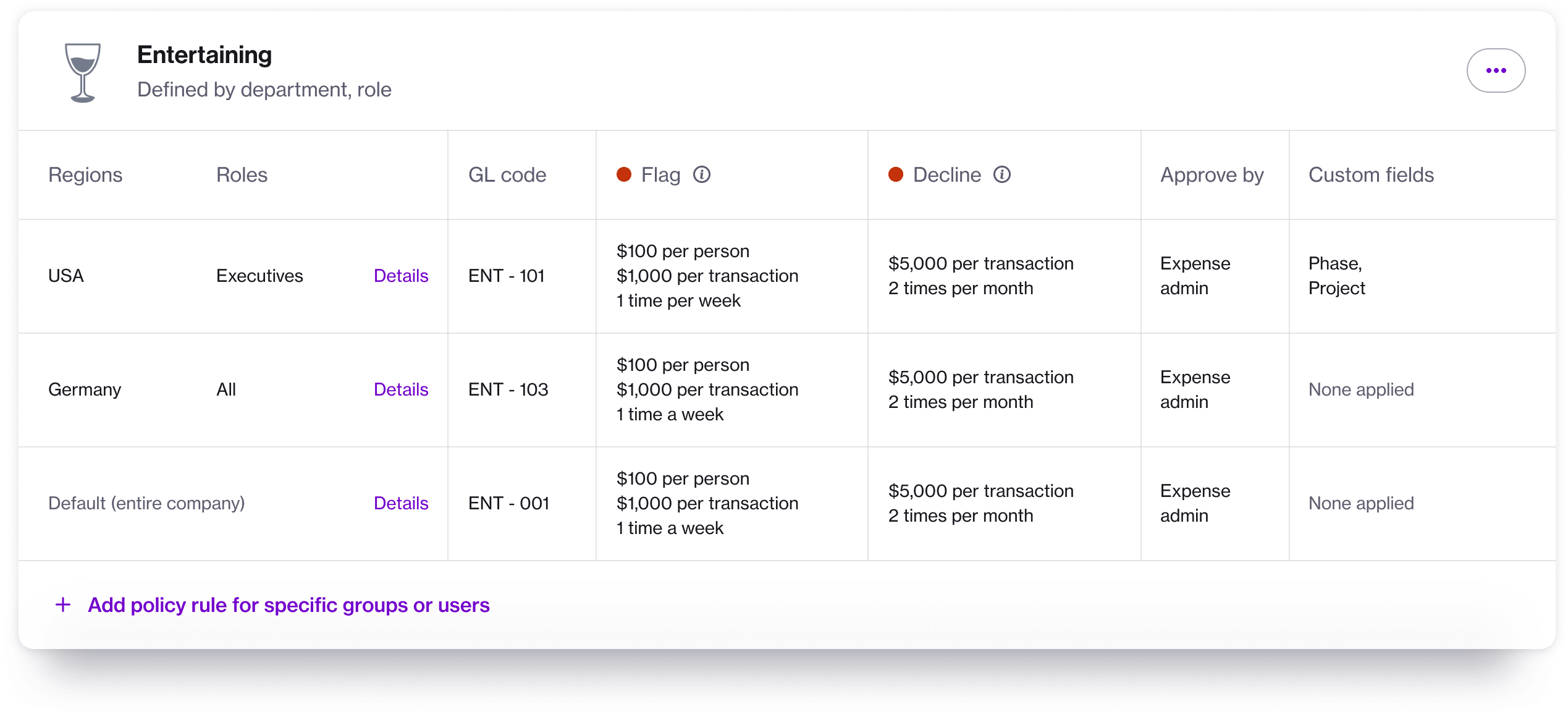
A close look at policy controls for entertainment using the Navan app
FAQs : P-Card vs. Corporate Card
Meet Navan
Navan simplifies expense management by integrating P-cards and corporate cards into a single platform with real-time tracking, customizable controls, and automated reconciliation. Businesses gain instant visibility into spend, enforce policies with built-in security features like single-use virtual cards, and eliminate manual expense reports. With seamless integration into ERP and HR systems like NetSuite and QuickBooks, Navan keeps financial data accurate.
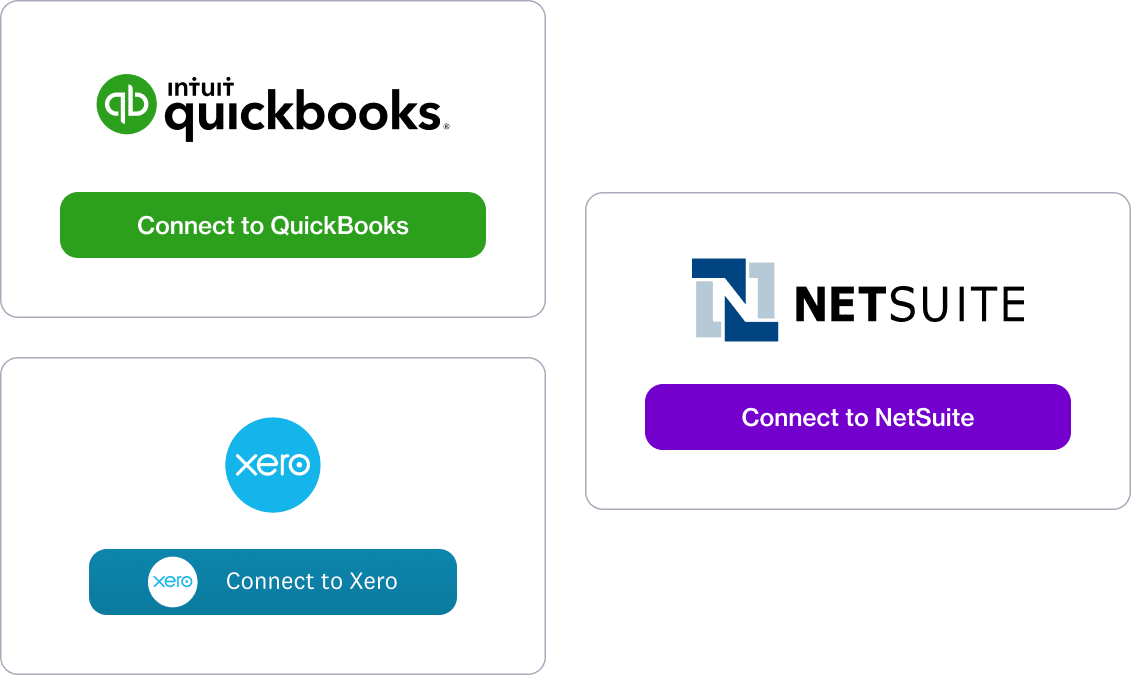
Navan accounting integrations with QuickBooks, NetSuite, and Xero
The Bottom Line
Picking between P-cards and corporate cards is like choosing the right tool for a job — both get it done, though one may save you more time and hassle. Opting for a solution that lets you integrate both could eliminate the need to make a decision.
Ready to discover how Navan has solved expense management? Try it today.
This content is for informational purposes only. It doesn't necessarily reflect the views of Navan and should not be construed as legal, tax, benefits, financial, accounting, or other advice. If you need specific advice for your business, please consult with an expert, as rules and regulations change regularly.